
Ultrasound Teeth Cleaning for Dogs
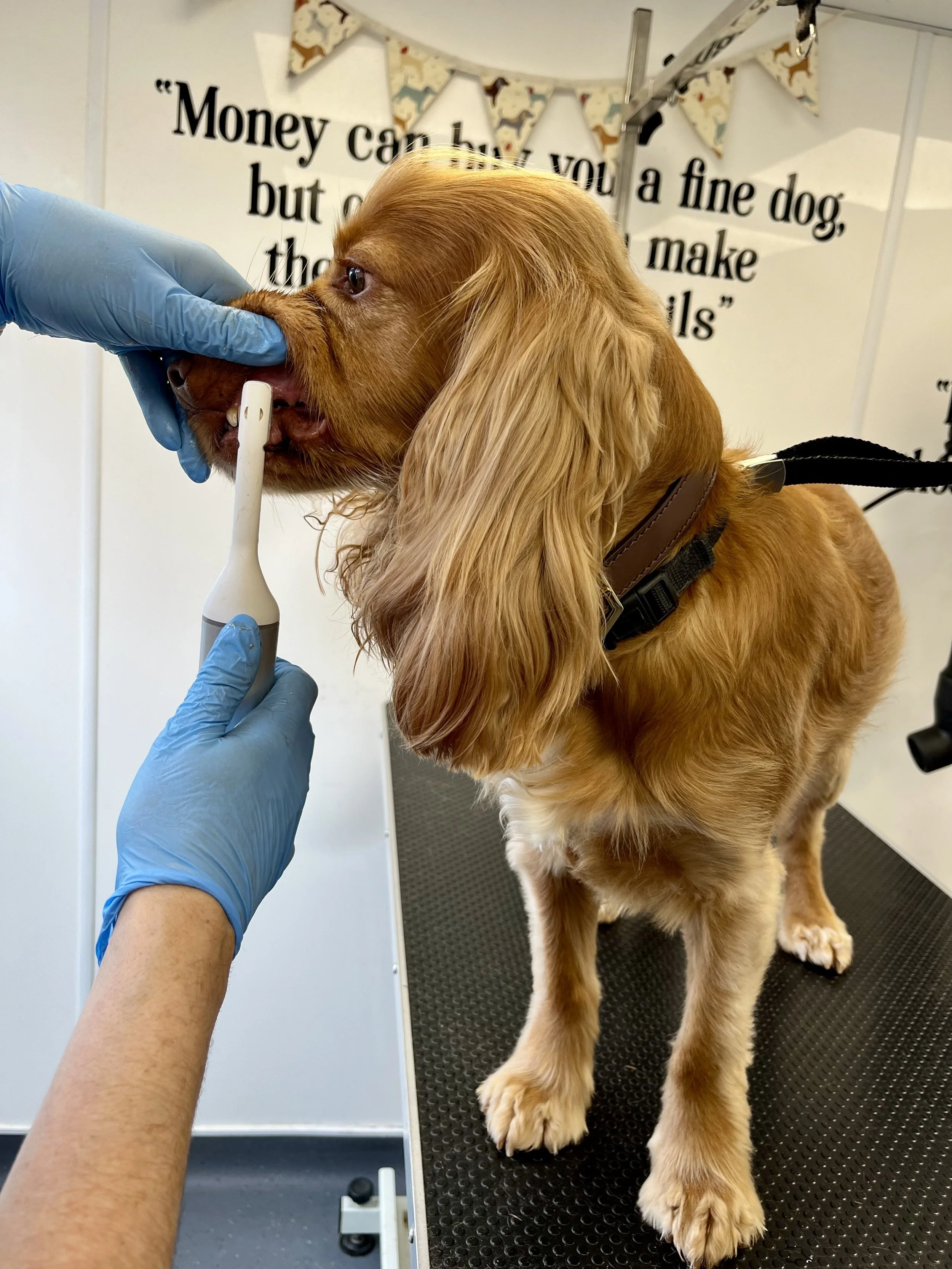
Dogs Need Dental Care Too!
Just like humans, dogs need regular dental care to maintain a healthy mouth and overall wellbeing. Poor dental hygiene can lead to a build-up of bacteria, which may contribute to issues such as gum disease, bad breath, mouth pain, and in some cases more serious health concerns affecting the heart, kidneys, and other organs.
Regular teeth cleaning helps reduce harmful bacteria in your dog’s mouth and supports long-term dental health.
What Is Ultrasound Teeth Cleaning?
Ultrasound teeth cleaning for dogs is a gentle, non-invasive dental hygiene service designed to improve oral health without the need for anaesthetic, vibration, or scraping.
I use the award-winning CleanyTeeth® Ultrasound Toothbrush, which cleans using ultrasonic waves rather than mechanical movement. This makes it ideal for dogs who are sensitive, nervous, or unable to tolerate traditional brushing methods.
How Is Ultrasound Teeth Cleaning Different from a Regular Toothbrush?
Traditional toothbrushes — manual, electric, or sonic — clean teeth using physical movement and vibration against the enamel. These methods typically rely on 20,000–30,000 mechanical movements per minute.
The CleanyTeeth® Ultrasound Toothbrush works differently. It:
Cleans without movement, vibration, or noise
Produces up to 96 million ultrasonic air vibrations per minute
Works in combination with a special ultrasound toothpaste
Gradually breaks down plaque and tartar layer by layer, including deep within the gum pocket
Because there is no brushing action, the experience is far more comfortable for your dog.
Benefits of Ultrasound Teeth Cleaning for Dogs
Ultrasound teeth cleaning offers a range of benefits, including:
Breaking down harmful oral bacteria
Supporting healthy gums and promoting blood circulation
Reducing bad breath
Helping prevent gingivitis, periodontitis, and other dental issues
A calm, stress-free experience suitable for many dogs
This service is similar to a dental hygienist appointment, rather than a replacement for veterinary dental treatment.
Is Ultrasound Teeth Cleaning Safe for My Dog?
Yes. Ultrasound technology has been safely used in human and veterinary medicine for decades. The ultrasonic waves produced by the CleanyTeeth® toothbrush are completely harmless and do not cause discomfort.
There is no vibration, or noise, making it a safe and gentle option for many dogs when used appropriately.
The Cleaning Process
Initial Teeth Cleaning Assessment (30 minutes)
Before any treatment begins, I recommend booking an initial dental assessment appointment. This allows me to:
Inspect your dog’s teeth and gums
Assess whether ultrasound teeth cleaning is suitable
Ensure there are no visible signs of underlying dental disease
See how well your dog tolerates having their mouth handled
Please note: I am not a veterinarian and cannot diagnose dental disease. Ultrasound teeth cleaning is not a substitute for veterinary dental treatment.
If I have any concerns, or if your dog’s dental health appears compromised, I may recommend a veterinary check before proceeding.
Training & Desensitisation
Some dogs may need time to adjust to having their mouth and teeth touched. This may involve:
Gentle desensitisation during the assessment
Training exercises at home
Gradual introduction before deep cleaning sessions
Deep Cleaning Appointments
Typically, last around 30 minutes
Length depends on your dog’s tolerance and dental condition
Most dogs require 2–5 sessions to achieve optimal results
Once your dog’s teeth are clean, we can discuss at-home dental care routines and book maintenance sessions 3–4 times per year to help maintain a healthy mouth.
Important Information Before Booking
Your dog must be comfortable having their mouth and teeth touched
Please practise this gently at home before booking
Ultrasound teeth cleaning cannot be performed on dogs with untreated dental disease
Book an Ultrasound Teeth Cleaning Assessment
If you’re interested in improving your dog’s oral health with a calm, gentle approach, please book an initial assessment using the enquiry form.
What our customer’s say

Vicky has been working with my elderly dog for the last few months. He has a compromised immune system so we have to be extremely cautious with what we do with him. I found Vicky to be the most approachable and knowledgable person in the area, who my vet and I were happy with to work on my dog. He has three sessions with her now and his teeth and gums are showing so much improvement.
Vicky takes her time to make him relaxed and comfortable and accepting of the procedures. He is content to stand and allow her to thoroughly clean and look at his mouth. She even supplied us with some lovely oils to use at home to assist in the process of cleaning his mouth.
From initial contact, booking, to follow up visits and treatments I can not thank or praise Vicky enough in her respectful and knowledgeable treatments for my dog.
I would highly recommend all her service's to anyone.
Thanks Vicky🥂
Received in November 2025